2024 is here and e-commerce continues its rapid growth. In such a scenario, it just makes sense that you choose the right platform for your online store that is robust and highly scalable. Last year was good for the online market but this year’s annual projections are even higher. According to Mannaferra, In 2024 E-commerce will share 20.8% of all retail markets.
For sellers and businesses seeking a stable yet flexible solution, Laravel is increasingly the go-to choice. We have already discussed how good Laravel is for ecommerce in our previous blog. Now, as content management becomes a key priority, let’s explore some top Laravel-compatible CMS options.
The Rise of Laravel in eCommerce
Just before we dive straight in, let’s talk about Laravel a bit. Over the past few years, Laravel has seen immense growth in popularity for developing ecommerce solutions. Some key factors that have contributed to its rise include:
- Flexible and robust architecture – Laravel provides a modular framework that makes it easy to scale ecommerce applications and handle heavy transaction volumes. Its MVC structure offers seamless integration of core commerce features.
- Rich feature set – Features like Eloquent ORM, queues, caching, and ample authentication/authorization methods enable building full-featured online storefronts. Packages create further growth potential.
- Thriving community – Laravel’s vibrant community of over 2 million developers provides extensive support, tutorials and packages. This growing ecosystem ensures long-term viability.
- Performance and security – Laravel’s optimizations for performance coupled with built-in security layers make it a reliable choice for handling sensitive online transactions.
- Search trends – Interest in Laravel for ecommerce has climbed significantly, with searches for “Laravel ecommerce” increasing over 100% in the past year alone according to Google trends. This indicates growing industry recognition.
- Versatility – Laravel appeals to a wide range of businesses with the flexibility to customize solutions for various models like B2B, multi-vendor and more.
Simple Laravel is a good and preferred language for developers and its scalability makes it even more appealing for business owners and serious sellers.
Exploring Top Options for Running Stores with Laravel
Laravel has many good tools to help with online shops. Some of these make it easy to manage stores. They let you focus on customers instead of website work. Some make mobile stores just as good as desktop ones. Others let many sellers share one site.
New ones keep adding new ways to help. Popular ones keep getting even better too. They all try keeping shoppers happy and sales growing no matter what.
Which suits you depends on your shop’s type. By learning what each does best, you can pick a good match. Your goals come first though.
This year brings many chances. These programs will guide your store through what’s next. Seeing how they work will aid your choice wisely. Choosing well means smooth sailing ahead running your shop the way you want. Let’s see what we have for now!
Amazcart – Laravel eCommerce System CMS
Amazcart empowers multiple sellers on one site smoothly. Merchants control sales, inventory, shipping and more via a clear dashboard. Sellers promote themselves through profiles and listings. Buyers enjoy a vast selection aggregated across shops. Amazcart makes collaboration simple while keeping data separate. Potential downsides could include limited payment options or customization.

eMart – Laravel Multi-Vendor eCommerce Advanced CMS
As a seasoned player, eMart polishes multi-vendor management to a fine art. Merchants govern finances, negotiations, and marketing campaigns with precision. Sellers profit from reputation tools and self-service portals. Shoppers browse deep catalogs presented enticingly. Though pricier, eMart may lift complex operations seamlessly. System requirements could burden smaller stores.

Active eCommerce CMS Laravel
Active eCommerce integrates tightly with Laravel for stable performance. Merchants control products, sales, reporting and more using a clean control panel. Developing new features remains streamlined thanks to joint upgrades. Active prioritizes swift loading to bolster conversion. While full-featured, initial costs may exceed simpler needs. Scalability empowers growing ambition.

iShop – Multi Vendor Laravel & Vue eCommerce CMS
iShop brings the snappy benefits of Laravel and Vue.js together. Merchants swiftly launch listings, manage orders, and view analytically-rich dashboards on any device. Sellers take charge through an intuitive interface. Buyers enjoy responsive browsing across stores. As a rising star, iShop shows dedication to community and progress. Compatibility requires developer expertise some may lack.

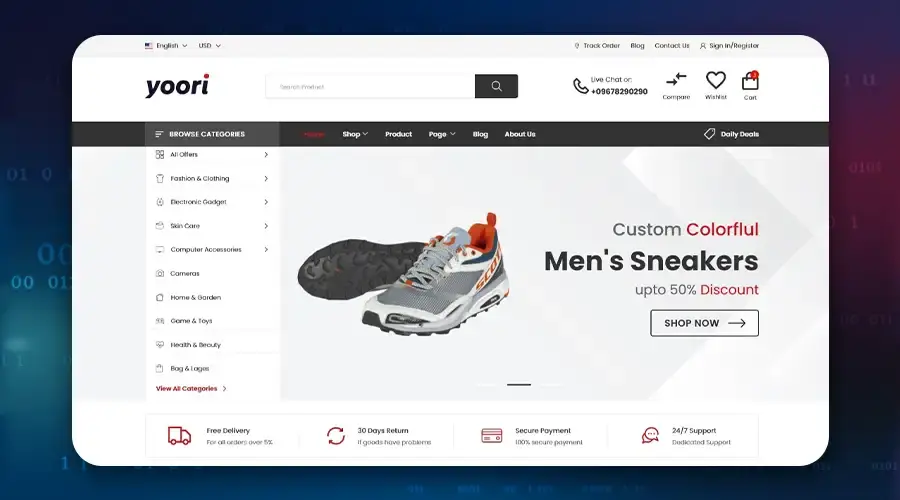
Yoori – Laravel Vue Multi-Vendor PWA eCommerce CMS
With a progressive approach, Yoori makes stores feel app-like for an immersive experience. Multivendor teamwork thrives through well-designed control panels. Performance excels across devices through rapid loading. Insightful analytics provide foresight into shopper habits. Yoori charms with constant upgrades and competitive pricing. Some find its learning curve steeper than alternatives.
Comparing Top Laravel Commerce Platforms
Each solution profiled holds distinct merits for different store needs. Let’s break down their key differentiators.
| Platform | Amazcart | eMart | Active Commerce CMS | iShop | Yoori |
| Multi-Vendor Support | ✔︎ Strong filters to combine seller stocks | ✔︎ Advanced reputation and profile tools for sellers | ✔︎ Separate seller and admin dashboards | ✔︎ Intuitive interface for seller management | ✔︎ Granular permissions customize seller roles |
| Product Management | ✔︎ Robust catalog tools for attributes | ✔︎ Advanced bulk actions for categories | ✔︎ Smooth inventory sync across channels | ✔︎ Real-time edits streamline updates | ✔︎ Drag-n-drop builder eases browsing |
| Performance | ⭕️ Average loading for huge shops | ⭕️ Potential delays with substantial traffic | ✔︎ Configurable caching optimizes resources | ✔︎ Blazing fast speeds via Laravel optimizations | ✔︎ Progressive rendering for snappy sessions |
| Reporting | ⭕️ Basic order analytics for insights | ✔︎ Sales and behavior dashboards uncover patterns | ✔︎ Granular order tracking guides decisions | ⭕️ Standard metrics benefit growth | ✔︎ Raw data exportable for custom KPIs |
| Pricing | ✔︎ Affordable for small businesses | $ Costlier but may scale larger | ⭕️ Variable based on features utilized | $ Competitively priced long-term | ⭕️ Steeper learning curve included |
| Customization | ⭕️ Limited changes possible to code | ⭕️ Core functionality not editable | ✔️ Full Laravel integration enables tailoring | ⭕️ Some adjustments through add-ons | ✔️ Api exposes system for unique needs |
In sum, eMart or Active eCommerce CMS may prove best for established, multinational ventures while Amazcart, iShop or Yoori suit agile indie brands on tighter budgets. Consider your specific context.
Future Trends in Laravel eCommerce CMS
As online sellers continue carving out diverse niches in this dynamic era, the platforms upholding their endeavors must evolve in parallel.
Artificial Intelligence
AI is at the peak of its hype and it is sneaking into the ecommerce space as well. Integration of AI and ML in Laravel platforms will revolutionize shopping with personalized recommendations, predictive searches, and intelligent product matching. Customers enjoy seamless, tailored experiences that increase engagement and satisfaction.
Advancing Security
As online transactions increase, cybersecurity rises in priority. Laravel is a secure framework so CMS solutions will strengthen authentication, encryption, and threat protection to safeguard sensitive data and maintain customer trust in digital storefronts.
Mobile-First Design
Responsive layouts will give way to mobile-centric features, performance optimization, and payment integration as consumers increasingly shop from small screens. Laravel powers omnichannel ecommerce wherever customers interact.
Progressive Web Apps
PWA capabilities deliver app-like shopping with offline access, rapid speeds, and seamless upgrading – fulfilling evolving consumer expectations. Laravel adopts this approach to bolster conversion and retain high engagement levels.
Sustainability
Customers now consider brands’ environmental and social impacts. Laravel incorporates tools showing supply chain transparency, carbon impact reporting and ethical sourcing to align commerce with sustainability values.
Conclusion
All these Laravel platforms help online stores in different ways. Choosing one can be hard with so many options.
For new or small stores, Amazcart, iShop and Yoori are best. They are affordable and easy to use. Amazcart works well for multiple sellers. iShop is very fast using Laravel and Vue. Yoori focuses on mobile which is important.
eMart is great for complex needs like negotiations. But it costs more than starters can pay. Active Commerce runs big sites smoothly.
In future, personalizing shops for customers and fast loading will matter more. Younger platforms will add these. eMart may buy smaller tools to stay ahead. Mobile shopping is growing, so Yoori is well positioned there.
In the end, any platform can power a successful store. Focus on customers, not just features. Offer good products they want. All these Laravel options make developing stores easier. Choose what best matches your budget and goals to get started.
Hybrid Web Agency is an expert Laravel e-commerce development company that can assist merchants in choosing and implementing the optimal solution. We offer flexible engagement models – from full turnkey Laravel projects to outsourcing our dedicated developers.
Sellers and businesses alike can scale their technical capabilities effortlessly while maintaining peace of mind. Our experience across frameworks like Laravel ensures online stores are built for success.