As an online entrepreneur in 2024, choosing the right platform to build your website and online business is a crucial decision. Two of the most versatile and powerful options are WordPress and ClickFunnels. WordPress is the world’s most popular open-source content management system, empowering you to create any kind of website. ClickFunnels is a feature-rich SaaS funnel builder designed for marketers and entrepreneurs. Both platforms have evolved robust ecosystems with plugins, integrations and communities.
At a glance, they share some core capabilities like drag-and-drop page builders and built-in checkouts. However, there are key differences that make use cases for each one unique . What are these differences? Let’s find out!
What is WordPress?
WordPress is an open-source content management system (CMS) that allows you to build any kind of website. It powers over 43% of all websites online today.
WordPress started in 2003 as a blogging platform but has evolved into a fully-featured CMS with capabilities like:
- Building websites and blogs
- Creating online stores and taking payments
- Offering online courses and membership sites
- Managing users, permissions and workflows
Some key advantages of WordPress include:
- Open source – Free to use and completely customizable
- Plugins – Extend functionality with over 55,000 plugins
- Themes – Completely change the design and layout with themes
- Community – Large global community of users and developers
- SEO-ready – Optimized for search engines out of the box
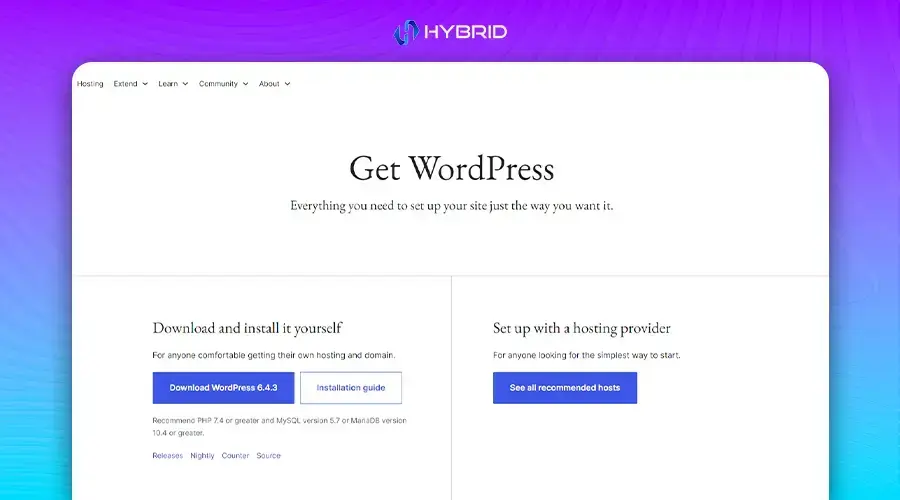
WordPress is self-hosted, meaning you’ll need web hosting and a domain name. Popular WordPress hosts include Bluehost, SiteGround and Kinsta.
The platform is managed through the WordPress dashboard on your site. You can fully customize the design and features by installing themes and plugins. There is a small learning curve to get familiar with how WordPress works.
Overall, WordPress offers unparalleled flexibility and control to build any kind of website on your own terms.
Also Read: WordPress Vs Umbraco
What is ClickFunnels?
ClickFunnels is a software-as-a-service (SaaS) platform designed for online marketers and entrepreneurs to sell products and grow their business.
It makes it easy to build sales funnels, landing pages, opt-in forms, membership sites and online courses without technical skills.
Some key features of ClickFunnels include:
- Drag-and-drop page builder – Build landing pages and sales funnels visually
- Built-in shopping cart – Create order forms and affiliate programs
- Email and Messenger marketing – Create and manage email campaigns
- Membership site capabilities – Offer premium content to members
- A/B testing – Test variations of pages to improve conversions

ClickFunnels has everything integrated into one platform, rather than needing separate tools.
It uses a monthly subscription model rather than requiring web hosting. Pricing starts at $97/month for basic features.
ClickFunnels offers premade funnel templates and page designs to choose from. It’s designed for ease of use, even for non-technical users.
Also Read: Substack vs WordPress
Main Feature Comparison
Page Builders
- WordPress has popular page builders like Elementor, Divi and Thrive Architect that provide drag and drop frontend and backend page building capabilities. These allow for deep customization and control over page design and layout.
- ClickFunnels also has an intuitive drag and drop page builder built-in. It makes it easy to build pages and sales funnels without coding. The options for custom CSS and HTML modifications are more limited compared to WordPress page builders.
- WordPress page builders have thousands of templates available, from full websites to individual pages. ClickFunnels provides a range of pre-designed funnel and page templates to choose from for common conversion tasks.
Checkout and Payments
- ClickFunnels has a shopping cart and checkout system integrated. You can create order forms, one-time payments, subscriptions and memberships. Affiliate programs can also be run.
- WordPress requires a checkout plugin like Thrivecart, WooCommerce or MemberPress to handle payments. These provide more advanced features like split testing and pay-what-you-want pricing.
Online Course Creation
- ClickFunnels now allows you to create online courses with its built-in features for hosting videos and drip content. Lessons, quizzes and completion certificates can be configured.
- For WordPress, you’ll need a dedicated course plugin like LearnDash, LifterLMS or Thrive Apprentice. These offer superior course creation tools like assessments, forums and gamification.
Email Marketing and Automations
- ClickFunnels has email marketing and automation capabilities pre-integrated. You can send broadcasts, set up autoresponders and trigger actions based on customer behavior.
- WordPress requires connecting a separate email marketing service like Mailchimp or ConvertKit via plugins. Automations can be created across tools but require more setup.
Other Beneficial Tools
- WordPress has over 55,000 plugins available, enabling you to expand functionality from SEO to security to social media marketing. ClickFunnels tools are relatively constrained to what’s pre-built.
- ClickFunnels includes a built-in CRM to manage contacts and track customer data. For WordPress, you’ll need a customer relationship management plugin.
- WordPress offers plugins to add community forums and social groups. This isn’t available on ClickFunnels currently.
Also Read: Multilingual Features in Laravel
Ease of Use Comparison
- ClickFunnels is faster and easier to get started with compared to WordPress. Its pre-built templates and drag-and-drop editor allow you to create pages and funnels rapidly without technical skills. However, you are much more constrained in customizing the design and functionality beyond what ClickFunnels offers out of the box.
- WordPress has a steeper learning curve to become familiar with the platform and ecosystem of themes and plugins. However, the control is unparalleled – you can use WordPress to create virtually any type of website you can imagine once you understand how it works. The possibilities are endless for customization.
- ClickFunnels provides an integrated all-in-one platform, while WordPress requires piecing together separate plugins for each feature like email marketing or memberships. This makes ClickFunnels simpler to use initially. But the disconnected tools in WordPress allow for more customization.
Pricing and Costs
- ClickFunnels pricing starts at $97/month for the basic plan. To access features like affiliate programs, you’ll need the $297/month Etison Suite plan.
- WordPress is free open source software. However, you’ll need separate costs for web hosting, domains, themes and plugins. High-quality managed WordPress hosting starts around $30/month. Top plugins and tools like email services can run $10-$30 per month each.
- For a full-featured business website, ClickFunnels will cost more than WordPress. But you save time by not managing separate tools. The cost difference depends on your specific feature needs – an advanced WordPress site may run $120+/month total.
Support and Resources
- ClickFunnels has an extensive official community with over 250,000 members. There are also dedicated support personnel. However, response times have often been criticized as slow.
- WordPress enjoys perhaps the largest user community on the web given its worldwide adoption. There is endless free information and documentation available online. However, support will vary depending on the specific themes and tools you choose.
- Both platforms have highly engaged user communities. Ultimately WordPress likely has more rapid and knowledgeable support available for free through forums and guides. But ClickFunnels offers direct 1-to-1 support.
Also Read: Best WordPress Plugins
Pros and Cons
| CMS | Pros | Cons |
| WordPress |
|
|
| ClickFunnels |
|
|
Our Verdict
When it comes to choosing between WordPress and ClickFunnels, there are clearly benefits and limitations to both platforms. WordPress offers unparalleled customization capabilities and an ecosystem of over 60,000 plugins to build a website exactly how you envision it. However, it requires more technical skill and piecing together various tools. ClickFunnels makes it fast and easy to create landing pages and sales funnels out of the box, but with less control and at a steeper price point.
Ultimately, there is no universally “better” platform – it depends entirely on your specific business needs, level of technical expertise, budget and growth goals. Outlining the core features, ease of use pricing and support allows you to make an informed decision based on your own unique requirements.
If you need help bringing your ideal website vision to life on WordPress, opt for an expert WordPress Development Agency. At Hybrid Web Agency our WordPress Developers are surely capable of that. We offer flexible partnership models, allowing you to either work directly with our team or outsource WordPress developers to cost-effectively augment your in-house capabilities. Reach out for a complimentary 30-minute consultation today to discuss how we can translate your website goals into reality on WordPress. With an understanding of your vision and obstacles, we can architect solutions tailored to empower your online growth.